Biography
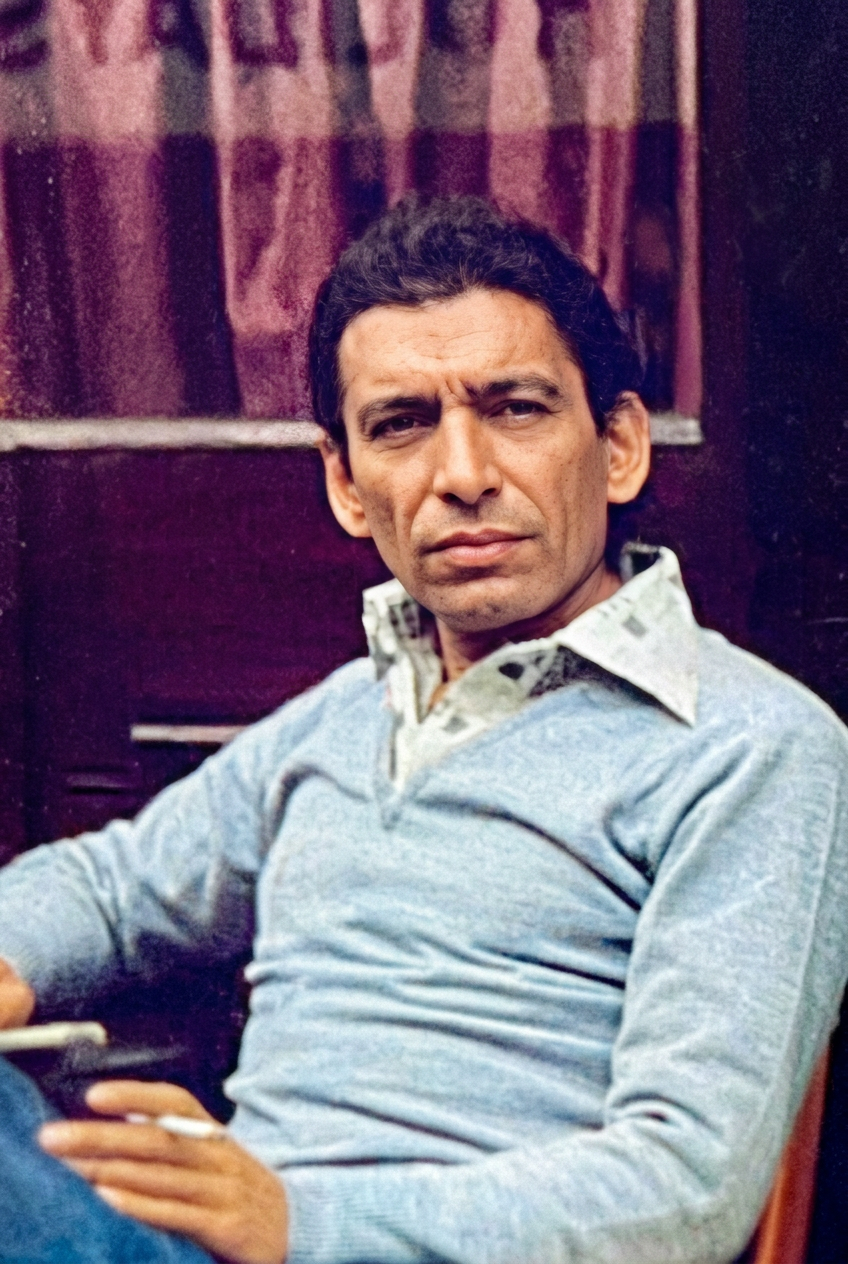
Bijan Mofid, playwright, theatre director, and actor
Bijan Mofid (1935–1984) was a playwright, director, actor, and composer whose works broke every ticket sales record in the history of Iranian theater. Born into a Tehran family at the heart of Iran’s cultural modernization — his father the founding figure of European-style theater in Iran, his mother a pioneering school principal — Mofid grew up immersed in literature, music, and performance. He channeled that inheritance into a body of work unlike anything before it: bitter allegorical satire rooted in Persian folk tales, scored with original music, and sharp with social criticism that spoke equally to intellectuals and the general public. His masterpiece, “City of Tales” (Shahr-e-Qaseh), was performed continuously for nearly five years across Iran and remains to this day the most frequently staged Persian play in history.
1935
Born on June 12 in Tehran, Iran
1950 - 1956
1950 - Enrolled at the Acting Academy alongside high school; began studying law, then English literature at Tehran University.
1953 - Worked as translator and assistant to Frank C. Davidson and George H. Quinby at Tehran University; won third prize with the play "The Dolls". Awarded theater scholarship from New York University — declined to remain in Iran after marrying Farideh Farjam.
1956 - Changed major to English at the Faculty of Literature, Tehran University; poems published in Iranian literary magazines.
1960 - 1969
1960 - Began collaboration with the National Art Theater Group and Abbas Javanmard.
1966 - Established the Atelier Theater in the Pishahangi House Hall — his first experimental theater workshop.
1967 - "City of Tales" (Shahr-e-Qaseh) recorded at Studio Eleven of Iranian National Television after two successful years on stage.
1968 - "City of Tales" performed at the Second Shiraz Art Festival — unprecedented national success. Atelier Theater dissolved; Mofid joined Bijan Safari's group to establish the Kargah Namayesh (Theater Workshop).
1969 - "Mah o Palang" (The Moon and the Leopard) performed at the Shiraz Art Festival.
1971 - 1979
1971 - Received commission to write children's theater from the Center for the Intellectual Development of Children and Adolescents; created "Torob" (Radish)
1972 - Acted in "Nagahan…" at the Nancy Festival in France.
1972 - 1975 "Jan Nesar" (At Your Service) staged
1973 - "Jan Nesar" (At Your Service) staged
1974 - Directed Bertolt Brecht's "Fear and Calamity of the Third Reich"
1977 - Acted in "Nagahan…" at the Shiraz Festival
1979 - "Sohrab, the Horse and the Dragonfly" canceled following the Islamic Revolution
1980 - 1984
1980 - Recorded and published several works in audio form to preserve them for posterity.
1982 - Emigrated to the United States (Los Angeles) after living in hiding for several months.
1984 - Staged "Sanjaqak" (adaptation of "Sohrab, the Horse and the Dragonfly") at the N.O.T.E. Theater, Los Angeles.
Died on November 12 in Los Angeles following liver and lung complications; cremated at Westwood Memorial Cemetery




Awards & Recognition
Throughout his career, Mofid received recognition not through formal institutions but through something rarer: the sustained devotion of his audience. His prizes and distinctions — from early competition awards to international festival triumphs — reflect a career that consistently transcended the boundaries of Iranian theater and reached stages across four continents.
1953
Third Prize — National Fine Arts Competition
Awarded by the Fine Arts Department of Iran for the play “The Dolls” — one of his earliest recognized works
1953
Theater Scholarship — New York University
Received a prestigious international scholarship from NYU, a rare recognition for an Iranian artist of his generation
1967
Record-Breaking Stage Run — City of Tales
After two years on stage, recorded at Studio Eleven of Iranian National Television — the first Iranian play to receive this distinction.
1968
Triumph at the Second Shiraz Art Festival
Performance of “City of Tales” brought unprecedented national and international acclaim, cementing his status as Iran’s foremost playwright.
1967–1972
Most Performed Persian Play in History
“City of Tales” was performed for nearly five years across Iran, holding the all-time record for the most frequently staged Persian-language play at home and abroad
1971–1977
International Festival Recognition — Children's Theater
His children’s plays were staged at prestigious festivals in Germany, England, Japan, Australia, and Jordan — among the first Iranian works for young audiences to reach international stages